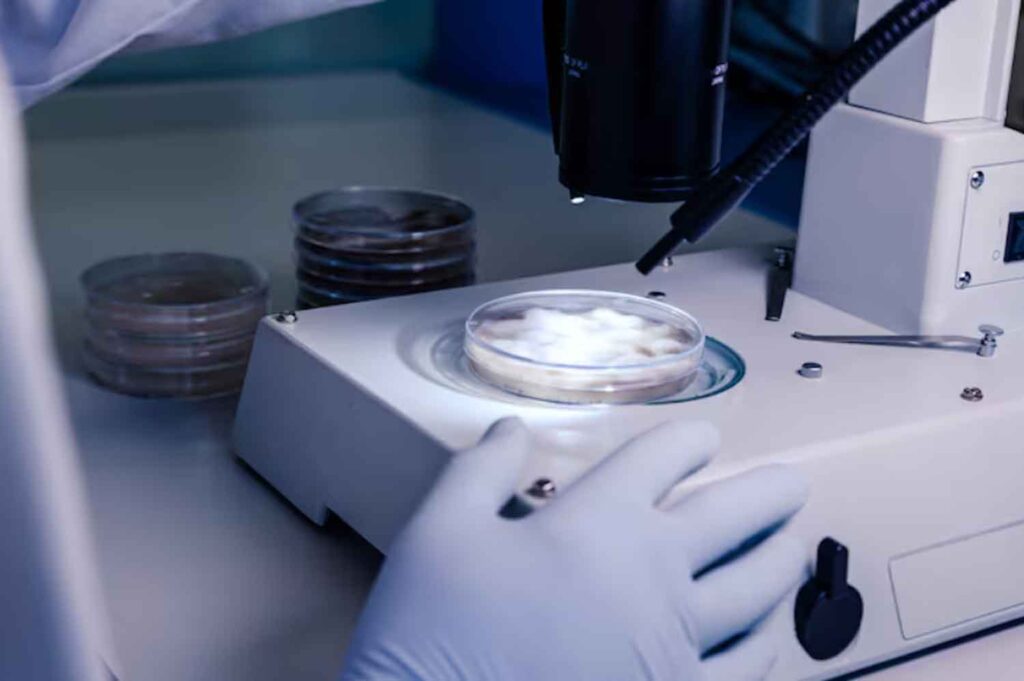
How Mesenchymal Stem Cells Are Manufactured for Clinical Use, From Lab Research to GMP Production
Published on: March 13, 2026
Introduction
Mesenchymal stem cells (MSCs) play a vital role in regenerative medicine, cell therapy, and tissue engineering. Their ability to modulate immune responses and support tissue repair has led to widespread clinical interest.
However, moving MSCs from laboratory research into real-world clinical use requires more than scientific discovery. It requires robust, scalable, and GMP-compliant manufacturing processes that ensure safety, consistency, and therapeutic effectiveness.
This article explains how MSCs are manufactured for clinical applications, from early-stage research to large-scale production.
Why Clinical Manufacturing of MSCs Is Different from Research Culture
In research laboratories, MSCs are often cultured using small-scale, manual methods. While suitable for discovery, these approaches do not meet the demands of clinical therapy.
Clinical manufacturing must address:
- Large cell dose requirements
- Consistent product quality across batches
- Strict regulatory compliance
- Traceability and contamination control
As a result, MSC manufacturing requires specialized platforms and standardized workflows.
Step 1, Cell Source Selection
The manufacturing process begins with selecting a suitable MSC source. Common sources include:
- Umbilical cord matrix
- Adipose tissue
- Bone marrow
Each source has unique biological characteristics, growth behavior, and scalability potential. Source selection influences yield, cost, and therapeutic application.
Step 2, Cell Isolation and Initial Expansion
After tissue collection, MSCs are isolated and expanded under controlled conditions. Early expansion stages typically focus on:
- Preserving cell identity
- Minimizing cellular stress
- Avoiding genetic instability
At this stage, many manufacturers transition from manual flasks to controlled culture systems to ensure consistency.
Step 3, Scaling Up with Bioreactor Systems
Scalability is one of the biggest challenges in MSC manufacturing. To meet clinical demand, production must move beyond planar culture systems.Modern MSC manufacturing uses bioreactors such as:
- Microcarrier-based stirred or Vertical-Wheel bioreactors
- Fully closed hollow fiber bioreactors
These systems allow:
- High cell densities in smaller footprints
- Controlled nutrient and oxygen delivery
- Reduced shear stress
- Automation and reduced manual handling
Bioreactors enable reliable scale-up without compromising cell quality.
Step 4, Serum-Free and Xeno-Free Culture Conditions
Clinical-grade MSCs are typically produced using serum-free or xeno-free media formulations.
This approach reduces:
- Risk of immune reactions
- Batch variability
- Regulatory barriers
Human-derived supplements, such as platelet lysate, are often used to replace animal serum while maintaining robust cell growth.
Step 5, Quality Control and GMP Compliance
Quality control is central to clinical MSC manufacturing. Throughout production, cells are tested to confirm:
- Identity (surface marker expression)
- Viability and growth characteristics
- Sterility and absence of contamination
- Functional properties
Good Manufacturing Practice (GMP) guidelines require documented processes, validated equipment, and full traceability from donor to final product.
Step 6, Harvesting, Formulation, and Storage
Once MSCs reach the required cell numbers, they are harvested, formulated, and prepared for clinical use.
This may include:
- Cryopreservation for long-term storage
- Dose preparation for immediate administration
- Packaging and labeling under GMP conditions
Each step is designed to preserve cell potency and patient safety.
Why Manufacturing Strategy Impacts Clinical Success
The effectiveness of an MSC therapy does not depend solely on the cells themselves. Manufacturing methods directly influence:
- Cell consistency between doses
- Safety profile
- Cost of therapy
- Speed of clinical deployment
Scalable, automated, and closed manufacturing systems help bridge the gap between promising research and reliable clinical treatments.
The Future of MSC Manufacturing
As regenerative medicine continues to advance, MSC manufacturing is evolving toward:
- Fully automated production systems
- Closed, contamination-resistant workflows
- Integrated monitoring and process control
- Cost-efficient scale-up for commercial therapies
These developments are essential for making cell-based therapies accessible to more patients worldwide.
At Vivacell Bio, understanding and supporting these manufacturing principles is fundamental to advancing safe, scalable, and clinically relevant regenerative solutions.